Do Exercise Snacks Actually Add Up to a Meaningful Workout, or Is That Just a Nice Idea?
Quick Answer: Research on exercise snacks (short bursts of activity, like 1-3 minutes, spread through the day) shows they produce measurable cardiovascular and metabolic benefits comparable to some structured exercise for people who otherwise wouldn’t work out at all, though for building significant strength or high-end cardiovascular fitness, they’re a solid supplement rather than a full replacement for structured training.
Exercise snacks sound almost too easy to be real — a minute of stair climbing here, a set of squats there. The actual research says the concept holds up better than skepticism might suggest, within specific limits.

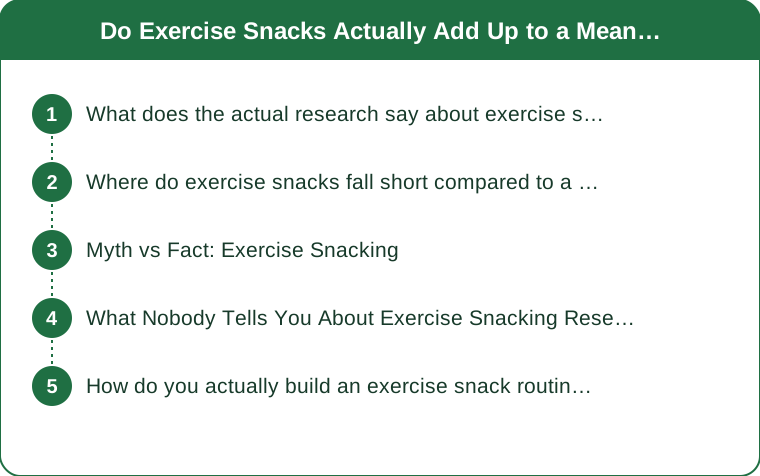
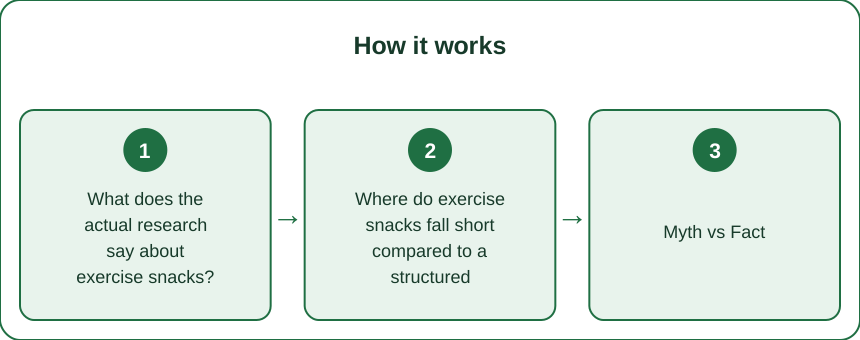
What does the actual research say about exercise snacks?
Multiple studies on short, frequent activity bursts (often called ‘exercise snacking’ in research) have found measurable improvements in cardiovascular fitness, blood sugar regulation, and even some strength markers in people who did several short bouts spread through the day, compared to fully sedentary controls.
Notably, some studies found short stair-climbing bursts throughout the day produced cardiovascular improvements comparable to longer, continuous exercise sessions in previously sedentary participants — the total volume mattered more than the continuous format.
Where do exercise snacks fall short compared to a structured workout?
Building significant strength or muscle generally requires more sustained loading and progressive overload than most exercise snack formats provide — a minute of bodyweight squats scattered through the day doesn’t replicate a structured strength program’s stimulus.
High-end cardiovascular fitness gains (training for a specific athletic performance goal) similarly benefit from sustained, structured sessions that exercise snacks alone don’t fully replicate, even though they meaningfully improve baseline fitness from a sedentary starting point.

Myth vs Fact: Exercise Snacking
Myth: Exercise snacks are basically a placebo — any real benefit requires continuous exercise. Fact: Multiple controlled studies show real, measurable physiological benefits from short accumulated bursts, particularly for previously sedentary people.
Myth: Exercise snacks can fully replace a structured workout routine for anyone. Fact: They’re most valuable as a supplement or an entry point, especially for sedentary people — those with specific strength or performance goals still benefit from structured training on top.
Myth: The bursts need to be high-intensity to count. Fact: Many studied protocols use moderate-intensity bursts (brisk stair climbing, not maximal effort) and still show meaningful benefit — it doesn’t have to be exhausting to add up.
What Nobody Tells You About Exercise Snacking Research
The ‘previously sedentary’ detail matters enormously for interpreting these findings — the benefit is most pronounced and best-documented in people going from near-zero activity to accumulated short bursts; the research is less clear on whether someone already moderately active gets equivalent benefit from switching a structured workout to snacked format instead.
Also underrated: exercise snacks appear to have a genuine adherence advantage — because each bout is short and low-barrier, people report sticking with the pattern more consistently than committing to longer structured sessions, which itself compounds the real-world benefit over time.
How do you actually build an exercise snack routine that works?
- 3-5 short bouts (1-3 minutes each) spread through the day: stairs, bodyweight squats, brisk walking bursts
- Attach them to existing daily triggers (every bathroom break, every hour on the hour) rather than relying on remembering
- Layer in 1-2 structured sessions weekly if strength or specific performance goals matter to you, rather than relying on snacking alone for those goals
TL;DR:
- Exercise snacks produce real, research-backed cardiovascular and metabolic benefits, especially from a sedentary baseline
- They’re less effective as a standalone strategy for significant strength or high-end performance goals
- Moderate-intensity bursts (not maximal effort) still show meaningful benefit in studies
- The low barrier to each bout may drive better real-world adherence than structured workouts alone
Exercise snacks genuinely add up — they’re just a supplement to, not a full replacement for, structured training when specific goals require it.
Keep Reading
This article is for general informational purposes only and is not medical advice. Always consult a qualified health professional for guidance specific to you.