Why Several Short Movement Bursts Can Outperform One Longer Workout for Certain Markers
A handful of two-minute movement bursts spread across a workday sounds like a compromise compared to one real workout, but for a specific set of metabolic markers the scattered approach can actually outperform a single longer session. Here’s the mechanism behind that, and where it does and doesn’t apply.

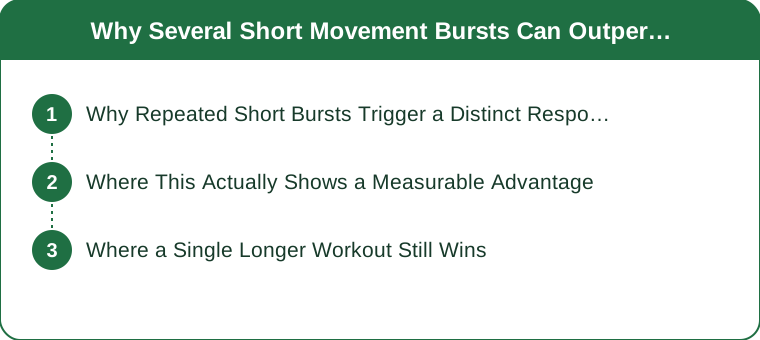
Why Repeated Short Bursts Trigger a Distinct Response
The real mechanism: the the-each-brief-activity-burst-produces-its-own-spike-in-blood-sugar-uptake-that-a-single-continuous-session-doesnt-replicate-the-same-way (the each short, distinct burst of movement prompting muscles to pull glucose from the bloodstream in its own separate spike throughout the day, creating multiple uptake events rather than the single, larger event a continuous workout produces — the multiple-separate-uptake-events-across-a-day-is-a-different-pattern-than-one-larger-event-not-simply-a-smaller-version-of-it), and the reframe (the scattered approach producing a genuinely different physiological pattern, not a diluted version of one longer workout).

Where This Actually Shows a Measurable Advantage
The specific case: the the-post-meal-blood-sugar-control-shows-a-particularly-strong-benefit-from-short-bursts-placed-right-after-eating (the short movement bursts performed in the window shortly after a meal showing a particularly strong effect on blunting the post-meal blood sugar spike, a benefit that’s harder to replicate by concentrating all activity into one session hours away from any meal — the timing-short-bursts-right-after-meals-is-where-the-advantage-is-most-clearly-demonstrated), and the frame (the benefit being most pronounced for this specific marker and timing, not a blanket claim that short bursts beat longer workouts across the board).
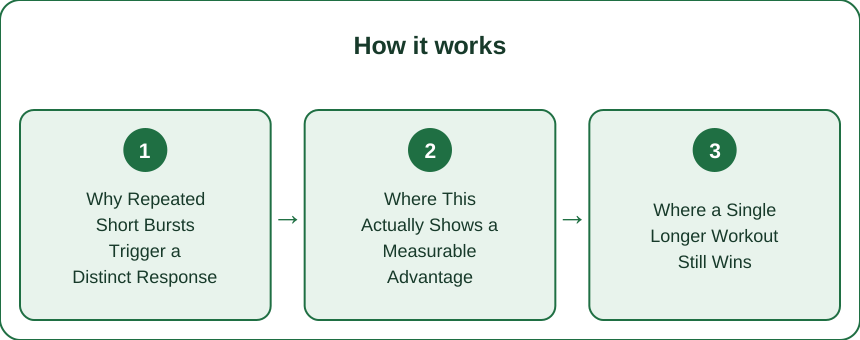
Where a Single Longer Workout Still Wins
The honest limit: the the-cardiovascular-endurance-and-strength-gains-still-favor-a-single-sustained-session-over-scattered-short-bursts (the building genuine cardiovascular endurance or meaningful strength adaptations still generally requiring a sustained, continuous effort at a certain intensity and duration that scattered two-minute bursts aren’t structured to provide — the endurance-and-strength-gains-still-need-a-sustained-session-scattered-bursts-dont-replace-that), and the frame (exercise snacks and longer workouts serving genuinely different physiological goals, making them complementary tools rather than substitutes for each other)).
Each short movement burst prompts muscles to pull glucose from the bloodstream in its own separate spike, creating a pattern of multiple distinct uptake events across a day that’s genuinely different from — not just a smaller version of — the single larger event produced by one continuous workout, with the effect on post-meal blood sugar control being especially pronounced when bursts are timed right after eating. That advantage doesn’t extend to cardiovascular endurance or strength, which still generally require a sustained session at real intensity, meaning exercise snacks and longer workouts serve different physiological goals rather than one substituting for the other.
Keep Reading
This article is for general informational purposes only and is not medical advice. Always consult a qualified health professional for guidance specific to you.