Exercise Snacks for People Whose Only Space Is a Hallway
Quick Answer: A hallway is enough space for effective exercise snacks because the movements that produce the most benefit per minute are standing, vertical, and require no floor contact. Wall sits, calf raises, split squats, standing rows against a door frame, and stair climbs all fit in under a metre of floor. Two minutes, three or four times a day, at an intensity that makes talking slightly harder, is enough to meaningfully affect blood sugar and cardiorespiratory fitness.
The advice always assumes a mat, a clear floor, and privacy. What you have is a corridor between the bathroom and the kitchen, roughly 90 centimetres wide, and a flatmate.
That is genuinely enough. Here is what fits.
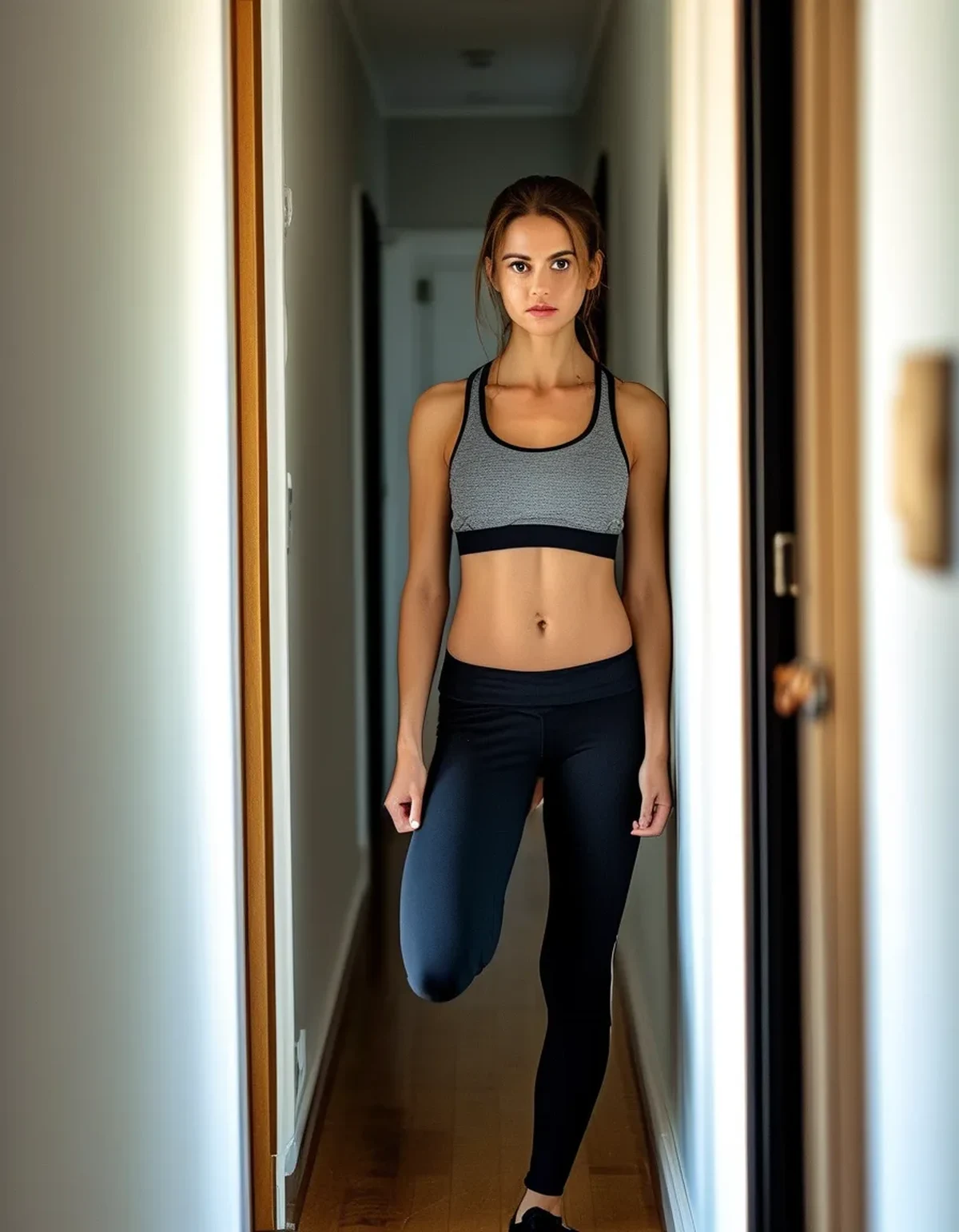
Does a two-minute hallway session actually count?
The research on very short bouts is more encouraging than most people expect. Brief, repeated bouts of vigorous activity across a day have been associated with measurable cardiorespiratory and metabolic benefits, and the practical bar is lower than the all-or-nothing framing suggests.
Intensity is what makes it work, not duration. Two minutes at an effort where talking becomes noticeably harder does something; two minutes of gentle movement mostly does not. The hallway constraint does not affect intensity at all.
Breaking up sitting has its own separate effect. Interrupting long sedentary periods every 30 to 60 minutes is associated with better post-meal blood sugar response, and this benefit does not require a large space or any equipment.
Frequency beats session length for this specific goal. Four two-minute bouts spread across a day produce a different physiological pattern from one eight-minute block, and the spread version is the one that addresses sedentary time.
A hallway removes the biggest failure point, which is setup. Any exercise requiring a mat, a change of clothes, or moving furniture has a barrier that a corridor session does not. The one you actually do is worth more than the better one you skip.
And standing movements suit the space naturally. The exercises that need floor space are largely optional; the ones with the best strength and metabolic return per minute are mostly vertical.
The 5 movements that fit in under a metre
1. Wall sit. Back flat against the wall, knees at roughly 90 degrees, hold. Start at 20 to 30 seconds and build. It is isometric, silent, needs no floor, and gets hard fast, which is exactly what you want from a two-minute window.
2. Calf raises, ideally on a stair edge. Three sets of 15 to 20, slow on the way down. Standing on a stair edge to get extra range makes them considerably more effective than doing them flat.
3. Split squats. One foot forward, one back, drop straight down. This is a genuine lower-body strength movement that takes about the length of your own stride, which is roughly the width of a hallway. Eight to ten each side.
4. Door frame rows. Hold both sides of a door frame, walk your feet forward, lean back, and pull yourself upright. It is the only pulling movement most people can do with no equipment at all, and pulling is what a sedentary day lacks most.
5. Stair climbs, if you have stairs. One flight at a brisk pace is one of the most efficient exercise snacks that exists. Two or three flights repeated puts you firmly into the intensity range that matters.
Rotate rather than stacking. A wall sit at 10am, stairs at noon, split squats at 3pm, and door rows at 5pm covers legs, cardio, and back across a day, at a total time cost of about eight minutes.
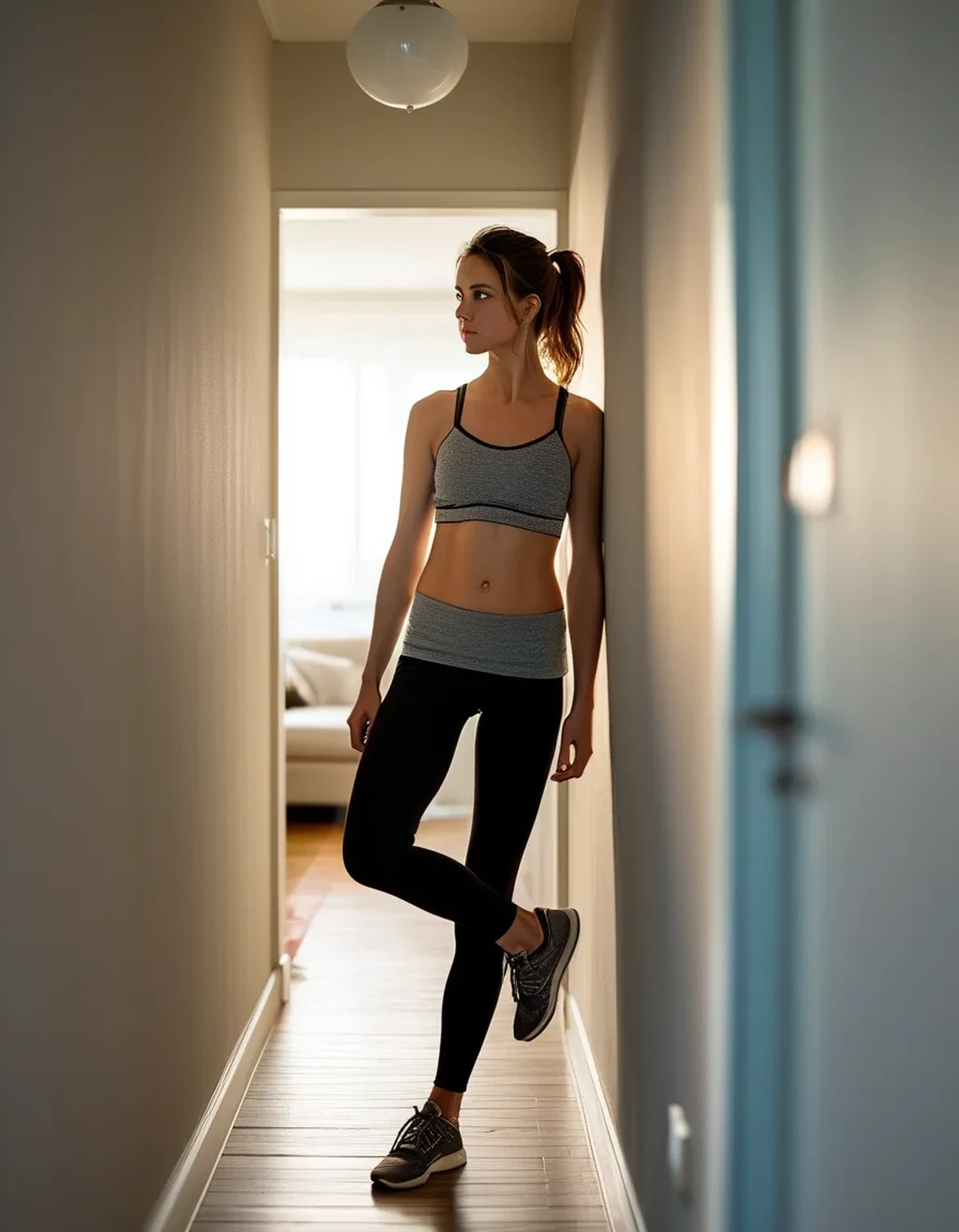
What Nobody Tells You About Micro Workouts in Shared Spaces
The social awkwardness is the real barrier, not the space. People stop doing hallway sessions because a flatmate walked past, not because the corridor was too narrow. Choosing movements that look unremarkable - calf raises, wall sits - solves more of this than any scheduling trick.
Noise is a bigger constraint than floor area in a flat. Anything with impact is a problem for downstairs neighbours in an older building. All five movements above are effectively silent, which is not an accident.
Attaching it to an existing event is what makes it stick. Kettle on, calf raises. Waiting for a call to connect, wall sit. The people who succeed at exercise snacks almost universally attached them to a trigger rather than to a time.
You will underestimate the intensity you need. Comfortable movement for two minutes does very little. The bar is genuinely uncomfortable by the end - which, in a two-minute window, is achievable and quickly over.
Shoes matter more than you would think. Split squats and stair work in slippers or bare feet on a hard floor change the movement and add slip risk. Keeping trainers by the door removes the excuse and the hazard.
The habit survives a schedule change better than a gym session does. When September rearranges everything, a two-minute corridor session is the thing that stays, and it is usually the reason people keep any consistency at all through a disrupted month.
How do you build it into a working day?
Pick three fixed triggers, not three fixed times. Kettle boiling, the end of a meeting, and arriving home are triggers. 10am, 2pm, and 5pm are appointments you will miss.
Aim for every 30 to 60 minutes of sitting, at minimum standing up. The full two-minute snack three or four times a day, plus simply standing more often, covers both the strength stimulus and the sedentary-time problem.
Keep it to one movement per session. Deciding what to do is what stops people. One movement, decided in advance, per trigger.
Do the hardest one earliest. Stairs or split squats at the first trigger, easier work later. Motivation is a resource that depletes across a day and this arrangement respects that.
Track only whether it happened, not how well. A tick on a calendar is enough. Detailed logging of a two-minute session takes longer than the session.
And expect a schedule change to break it once. September, a new commute, or a term restart will interrupt the pattern. Re-attaching to a new trigger takes about three days if you decide the trigger deliberately rather than waiting to feel like it.
FAQ: Hallway Exercise Snacks, Answered
Can you get real benefit from two-minute workouts?
Brief, repeated bouts of vigorous activity have been associated with measurable cardiorespiratory and metabolic benefit, and breaking up sitting improves post-meal blood sugar response. Intensity and frequency matter more than session length.
What exercises work in a very small space?
Wall sits, calf raises, split squats, door frame rows, and stair climbs. All are standing or vertical, need no floor space or equipment, and are effectively silent.
How often should I do exercise snacks?
Three or four short bouts across a day, ideally interrupting long sitting periods every 30 to 60 minutes. Spread beats concentration for this particular benefit.
How hard should it feel?
Hard enough that talking becomes noticeably more difficult by the end. Comfortable movement for two minutes does very little; the discomfort is the mechanism and it is over quickly.
What if I share the space and feel self-conscious?
Choose movements that look unremarkable - calf raises and wall sits read as standing around. The social barrier stops far more hallway sessions than the physical one does.
TL;DR:
- A hallway is enough, because the highest-return exercise snacks are standing, vertical, and silent.
- Five that fit: wall sits, calf raises on a stair edge, split squats, door frame rows, and stair climbs.
- Intensity is the mechanism - two minutes should leave talking noticeably harder, or it does very little.
- Attach each session to a trigger (kettle on, meeting ends, arriving home) rather than to a clock time.
- Three or four bouts a day, breaking up sitting every 30 to 60 minutes, is the pattern with the best evidence behind it.
The corridor was never the limitation. The setup time was.
Keep Reading
This article is for general informational purposes only and is not medical advice. Always consult a qualified health professional for guidance specific to you.