The Stair Snack: Why Two Flights Beat a Coffee Break
Of every exercise snack in the research, one keeps winning: stairs. The 20-60 second climb spikes the heart rate like nothing else the building offers, the fitness gains show in weeks, and the equipment is behind a door marked EXIT. The stair-snack manual.

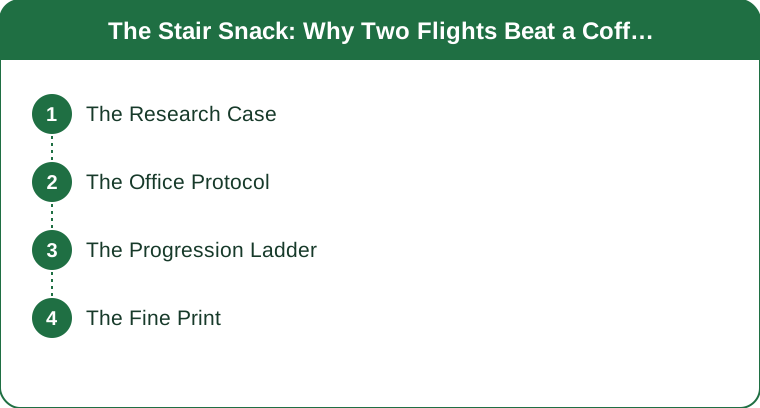
The Research Case
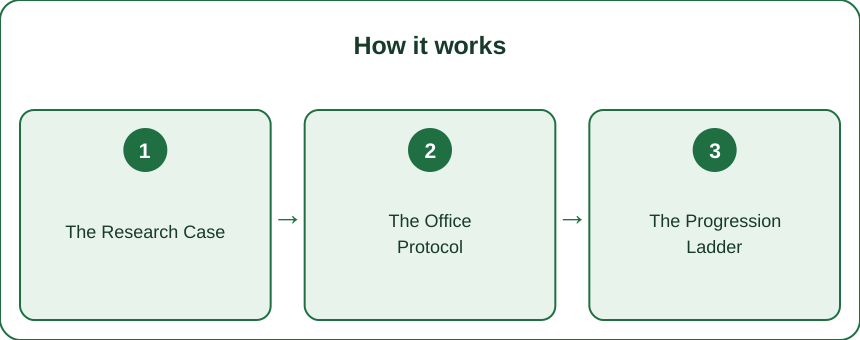
Why stairs star in the studies: the intensity-per-second math (stair climbing recruits the biggest muscles against gravity — the heart-rate spike of a sprint at walking dignity; the exercise-snack trials keep choosing stairs because the dose concentrates), the fitness findings (the studies on short stair-climbing bouts — three brief climbs a day, weeks not months — showed measurable cardiorespiratory improvement in untrained adults; the ‘too short to matter’ assumption tested and retired), the metabolic bonus (the post-meal stair snack does the blood-sugar work of the post-meal walk in less time — the lunch-hour double), and the accessibility card (stairwells are free, weatherproof, private-ish and everywhere — the gym the building came with).
The Office Protocol
The workday deployment: the meeting-gap climb (two-to-four flights between calls — up briskly, down as recovery, back at the desk in three minutes; the calendar’s crumbs converted), the elevator-decision rule (the standing policy — under four floors takes the stairs; policies beat daily decisions), the lunch-stack version (the post-lunch two-flight snack riding the blood-sugar window), the etiquette notes (stairwell walkers keep right, the sweat-management honesty — brisk not breathless for the meeting-adjacent climbs; the genuinely hard sessions save for day’s end), and the tracking gamification (flights count better than minutes — the five-flights-daily checkbox from the snack-counting doctrine).

The Progression Ladder
From breathless to bounding: the baseline weeks (steady one-step climbs at conversation-adjacent effort — the rail available, the pace honest), the intensity tier (the brisk climb that ends breathy — the research dose; 20-60 seconds of genuinely elevated effort), the double-step graduation (two steps at a time converts the climb into lunges — the strength snack hiding in the cardio one; the rail-hand hovers early), the volume build (three daily climbs → five; two flights → four — the progressive-overload of a staircase), and the home version (the single home flight looped ×5 is a legitimate session — the stair-snack needs one flight, not a tower).
The Fine Print
The honest notes: the knee conversation (stairs UP are knee-friendly strength work; stairs DOWN load more — the sore-knee protocol climbs up and elevators down, which is legal and smart; the knee-strength chapter’s step-up logic applies), the shoe-and-attention basics (the phone-scrolling stair descent is the genre’s one real hazard — eyes and hands where they belong), the breathless calibration (the snack ends breathy, not dizzy — the effort that recovers in ninety seconds; the extended-recovery climb was a workout wearing a snack’s name), and the compound arithmetic (five two-flight climbs daily ≈ a serious weekly cardio deposit that survived every meeting — the fitness that happened between things; the stairwell was the building’s gym all along, and the EXIT sign was mislabeled). Two flights, several times, most days: the coffee break that trains.
Biggest muscles against gravity, three climbs daily move fitness, up for knees and down with care, policies beat decisions. The stair snack is the research’s favorite — and it’s behind the EXIT door.
Keep Reading
This article is for general informational purposes only and is not medical advice. Always consult a qualified health professional for guidance specific to you.